
Amble
Pairs you with someone nearby for a 20-minute quest at a real place.
What it is
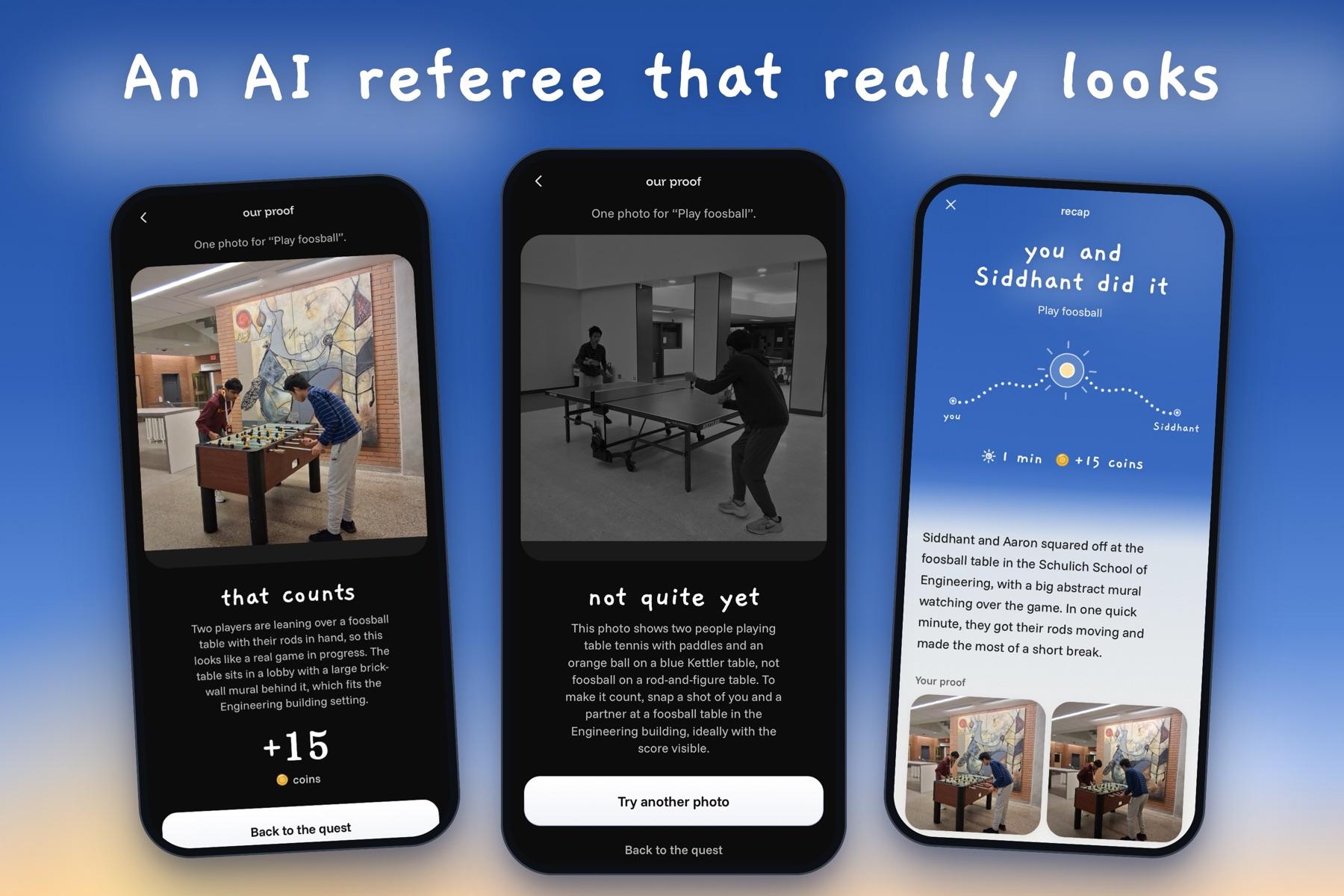
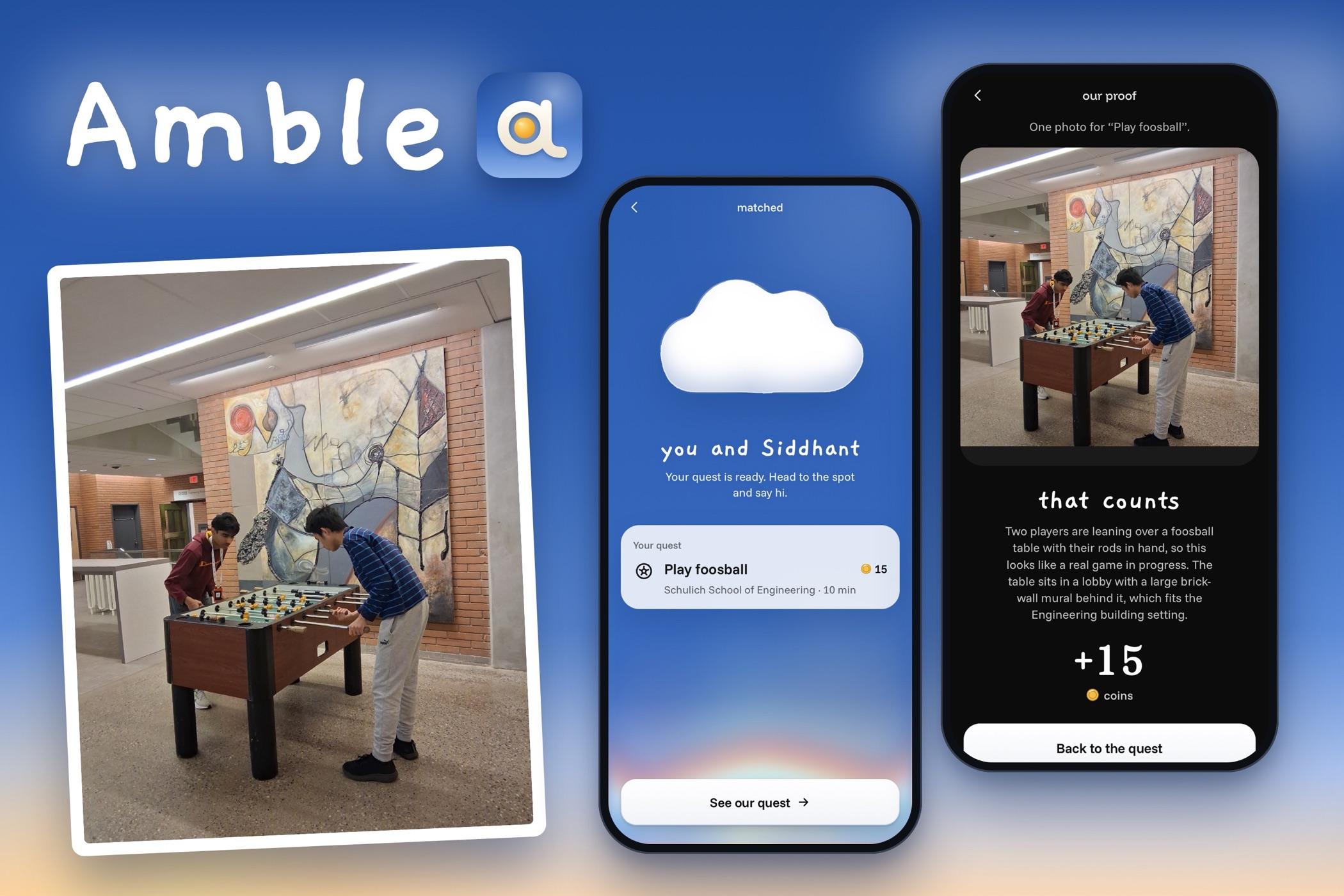
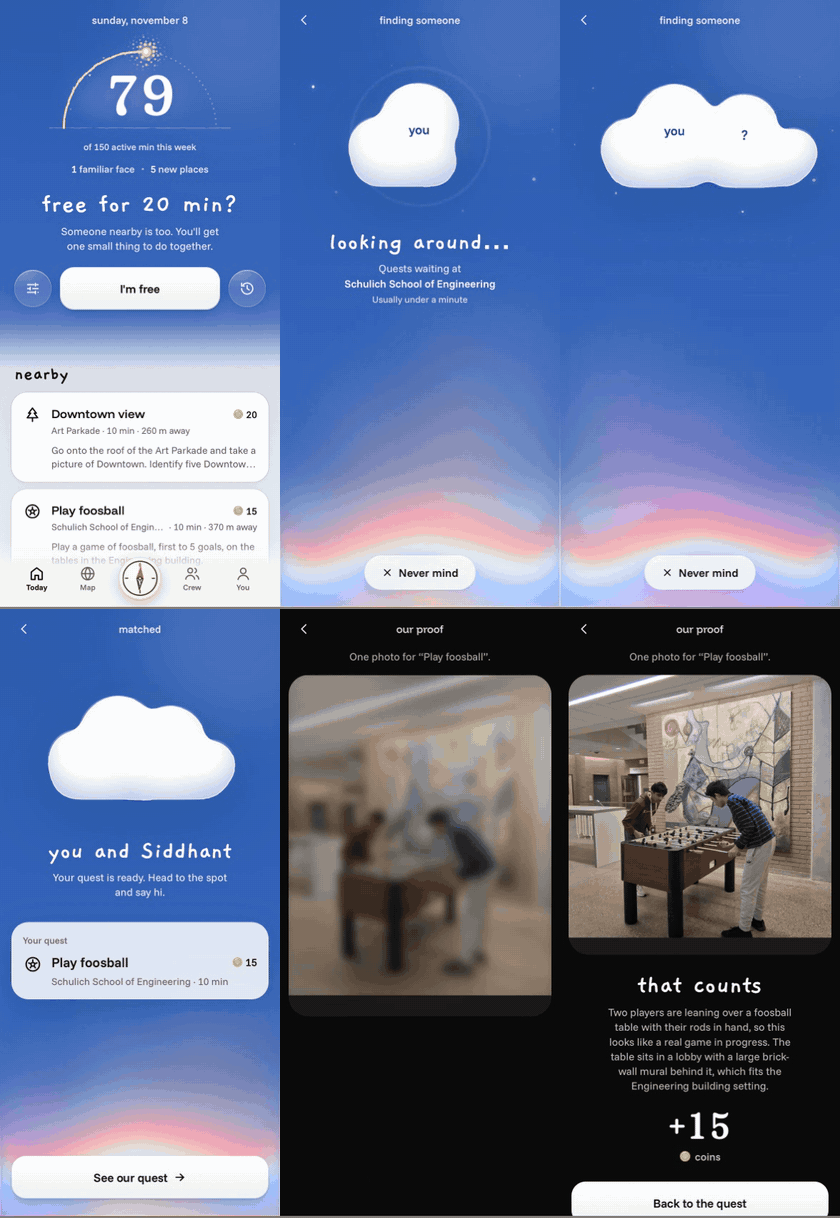
Tap "I'm free" and Amble pairs you with someone nearby who's free too. You both get the same short quest at a real, public place: a game of foosball in the UCalgary engineering building, or filming each other running 100 m backwards and playing it in reverse. There's something to do besides small talk.
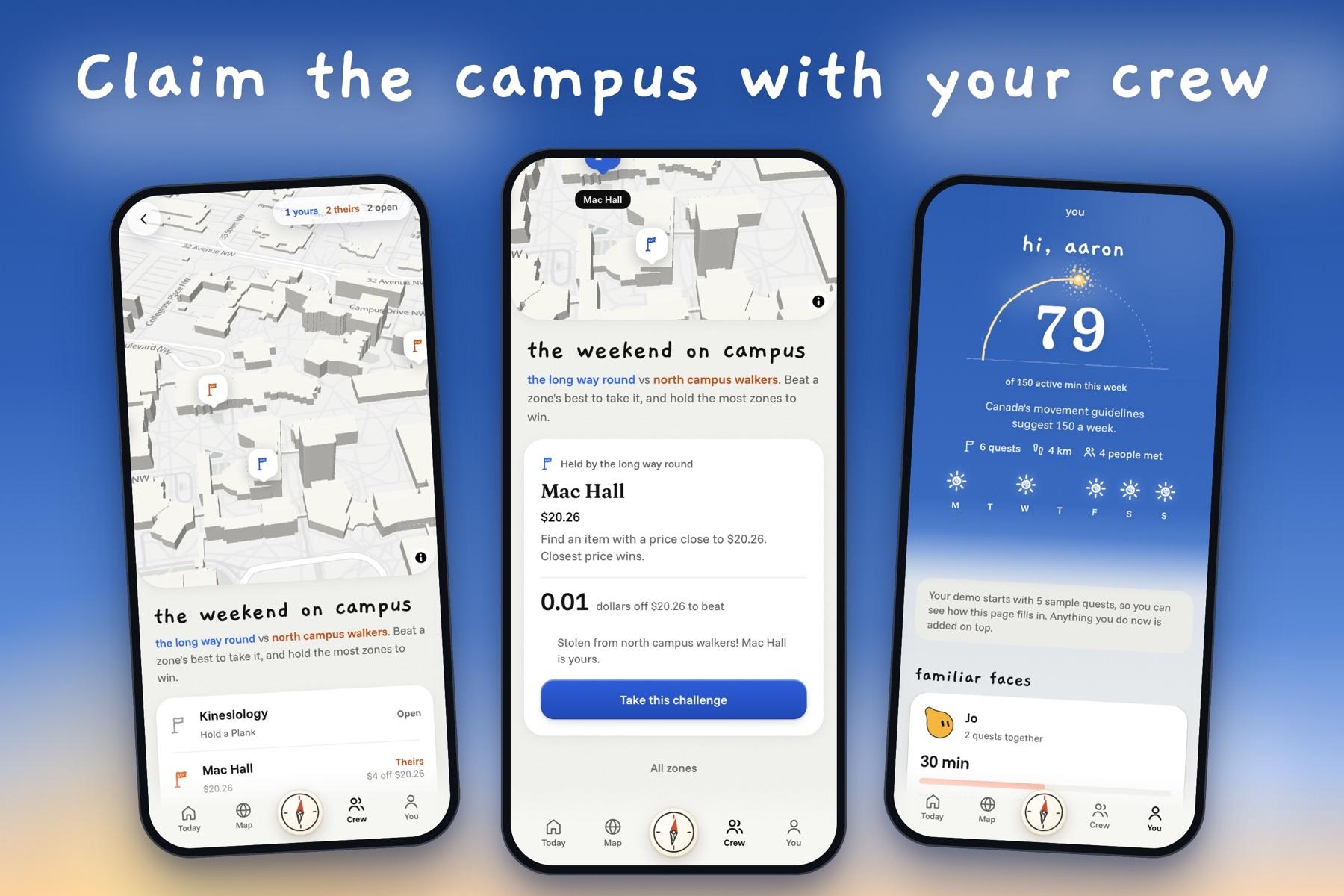
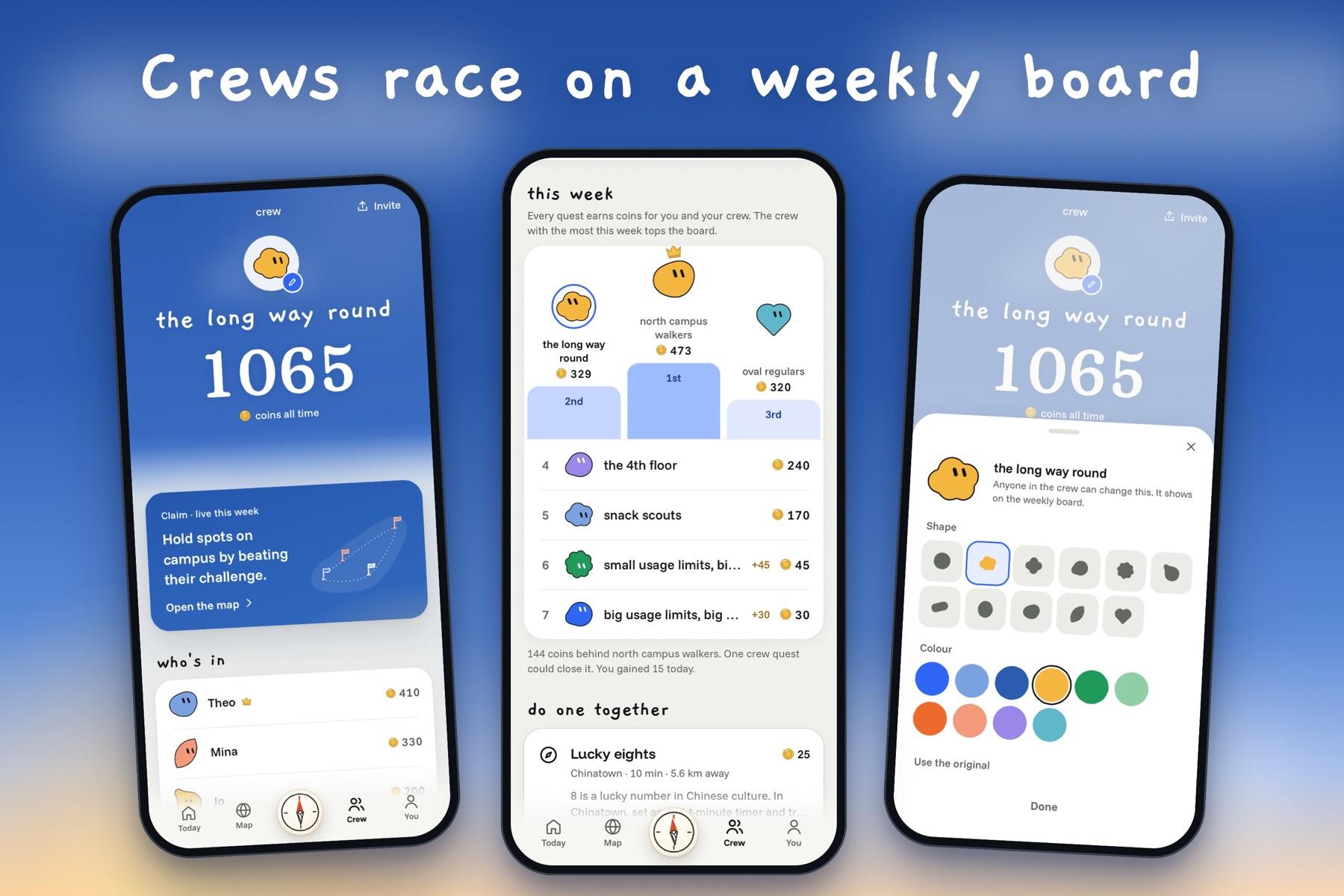
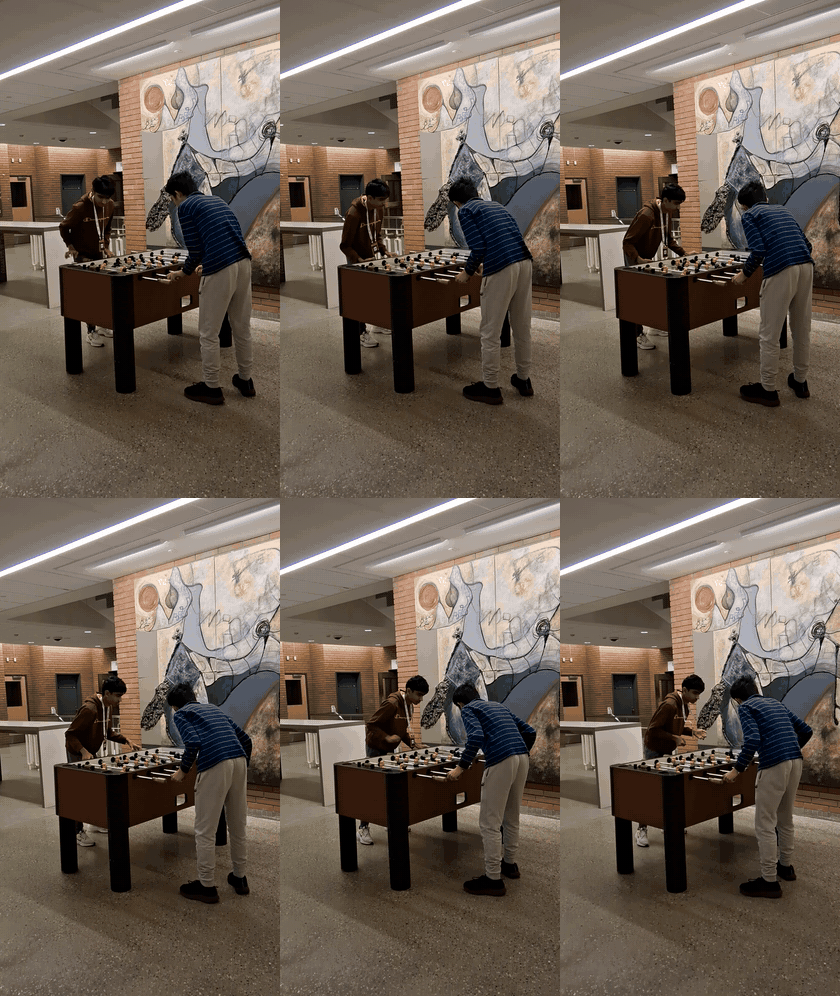
Send a photo or short video when you're done, and an AI referee checks it against the quest. Then you get a recap and choose whether to stay in touch. Crews of friends earn coins together and compete to claim spots around campus.
We built it because 23% of Canadians aged 15 to 24 always or often feel lonely, and only 46% of adults get 150 active minutes a week. We wrote every quest by hand, at places around Calgary that an AI wouldn't know about.
Built in 24 hours with Danny Wang, Aaron He, and Jonas Huang at Hack the Change 2026.
A real quest: foosball in the engineering building, matched, played, and approved.
Demo
How it works
- One Next.js app on Vercel with no background workers: the game moves forward whenever a phone checks in, and every rule runs on the server inside a database transaction so two phones can't race each other into a bad state.
- Postgres on Tiger Data stores everything, with location pings in a TimescaleDB hypertable and a 30-day retention policy. Auth0 handles sign-in.
- Claude Haiku checks proof photos (and three still frames from each video) against the quest and writes the recap. Every AI call has a timeout and a fallback, so a slow model never leaves anyone stuck. It costs about $1 per 1,000 quests.
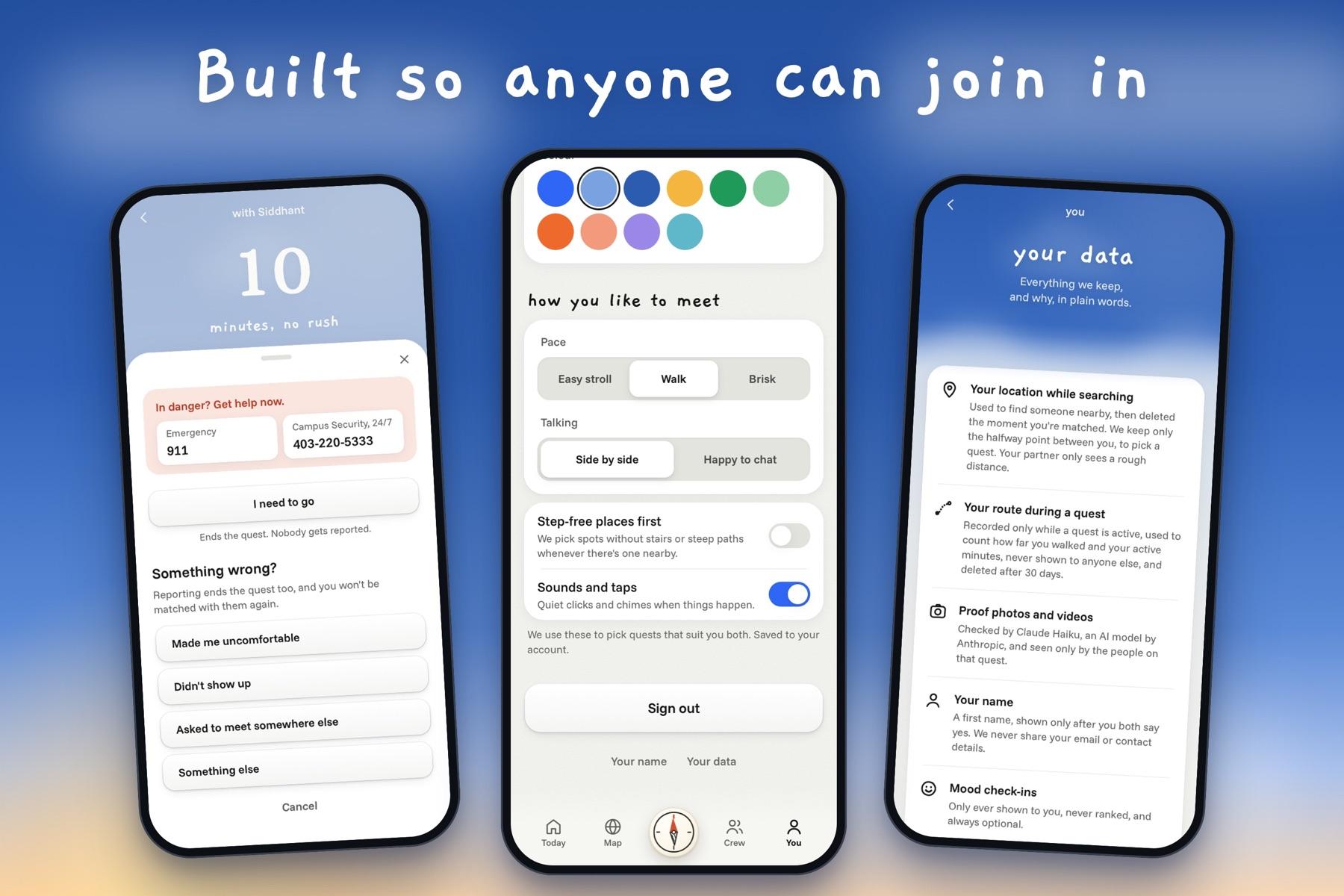
- Safety is built in: you meet at a public spot, never at each other's location, your location is deleted the moment you're matched, and one tap during a quest opens 911 and Campus Security.
- Comfort settings pick step-free places, an easier pace, or side-by-side quests. The app works with screen readers and respects Reduce Motion.
- An end-to-end test plays the whole product over HTTP as a dozen simulated people.
Stack
- Next.js
- TypeScript
- Postgres
- Tiger Data (TimescaleDB)
- Auth0
- Claude Haiku
- MapLibre
- Vercel
Results
- Winner, Best Use of Tiger Data at Hack the Change 2026 (204 participants, University of Calgary).
- Live at amble.health: open it on two phones and tap "Try the demo", no account needed.